


Tell us, SORAYAN! The secrets of Kansai International Airport!

SORAYAN, the beloved official character of Kansai International Airport, Osaka Itami Airport, and Kobe Airport, has uncovered the secrets of Kansai International Airport in three exciting topics. How much do you know?
SORAYAN works tirelessly to bring smiles to everyone at the airport and in the surrounding towns.
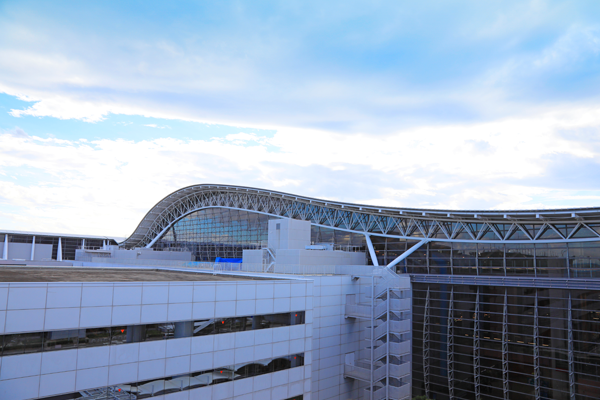
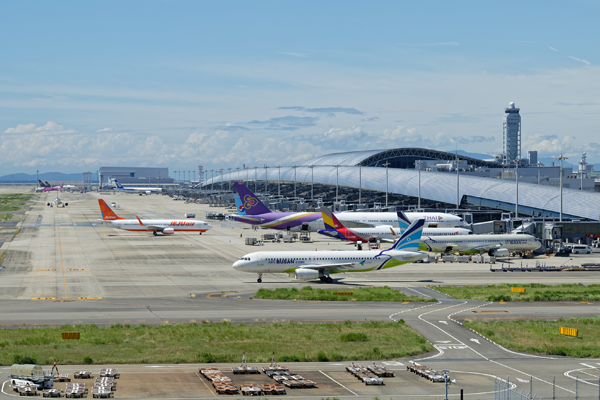
The terminal building was designed by an international team led by renowned Italian architect Renzo Piano. The iconic roof, symbolizing Kansai International Airport (KIX), features an arc with a radius of 16.4 km. The glass wall on the steel roof incorporates the finest materials and technology from around the world, including France, Italy, and the United States.

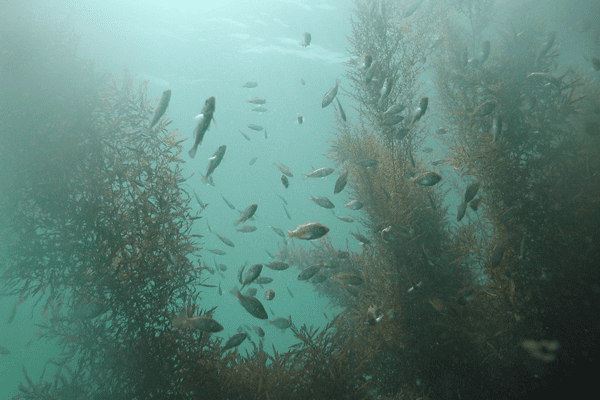
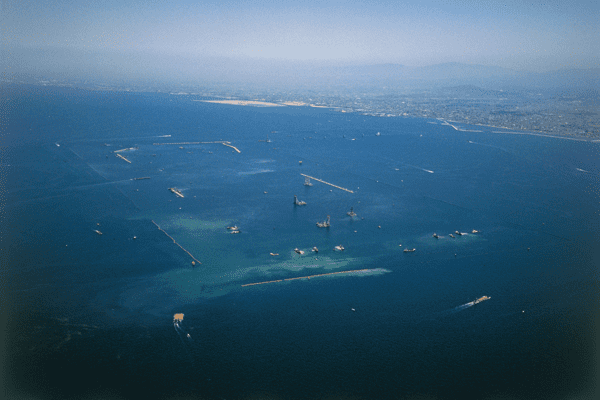
The island housing KIX's first runway was created by reclaiming the sea at a depth of 18 meters. The gently sloped revetment supports seaweed growth, providing a habitat for marine life. Around 200 species of sea creatures, including wakame seaweed, swordfish, yellowfin grouper, and sea bream, thrive here. Occasionally, sea turtles and finless porpoises also visit!

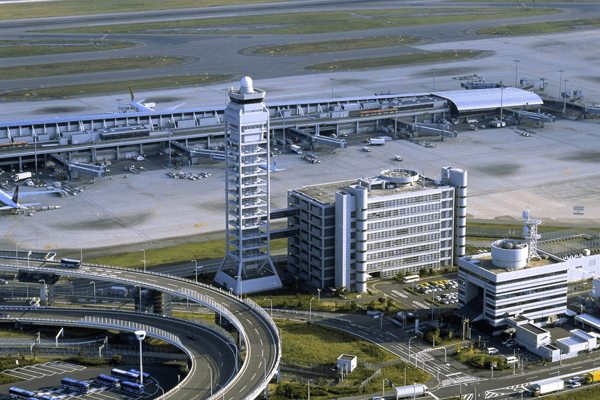
The tower stands at an impressive 86.4 meters. Air traffic controllers, who work around the clock to ensure air safety, give instructions to aircraft within a 9 km radius of the airport, guiding them for takeoff and landing. It's truly remarkable how they manage everything 24/7!

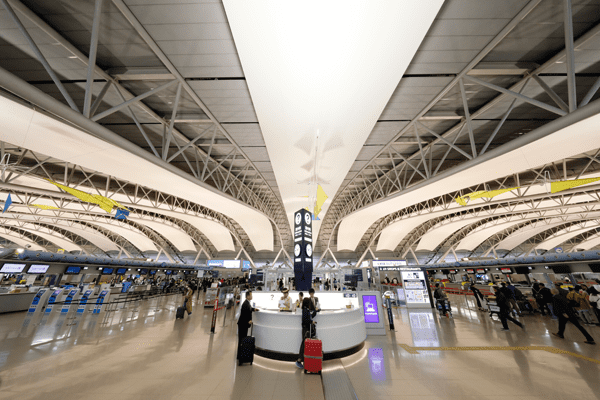
These are known as "open air ducts." They create airflow for cooling and heating through large jet nozzles at the rear. Additionally, they serve as indirect lighting by reflecting light from below, adding a stylish touch to the terminal's design.

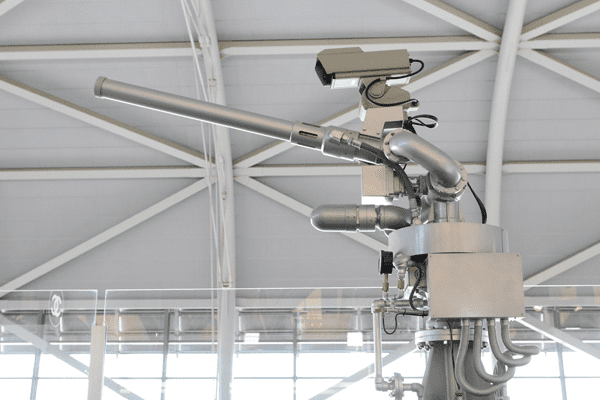
Due to the large, open space with high ceilings and no partitions, regular sprinklers are not effective for fire suppression. Therefore, we've installed four "water cannon" systems, similar to those used in Tokyo Dome and Fukuoka Dome, to ensure efficient fire extinguishing.

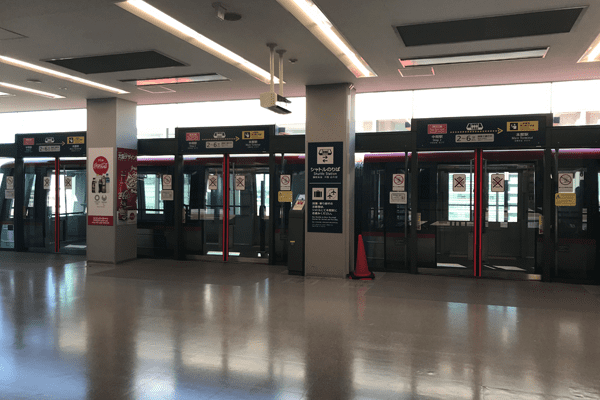
The "Wing Shuttle" is a new transportation system designed to move passengers between the terminal building and the North and South Wings. It's a horizontal elevator, similar to elevators and escalators, but not a railway. Although it looks like a train, it operates differently. How unique!

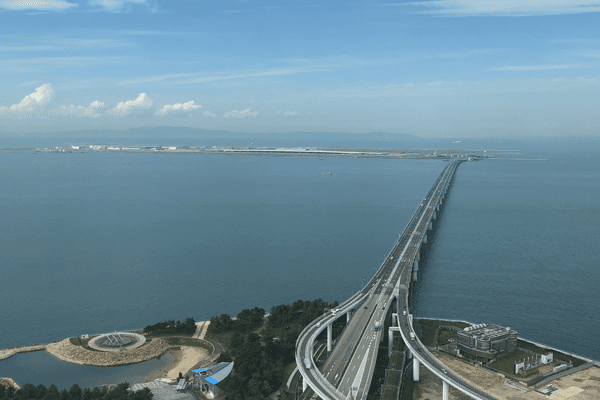
The connecting bridge at Kansai International Airport is 3,750 meters long. Interestingly, it's longer than Runway A (3,500 meters) but shorter than Runway B (4,000 meters). The average length of Runway A and Runway B is exactly the length of the connecting bridge! (3,500 m + 4,000 m) ÷ 2 = 3,750 meters. What a coincidence!

The connecting bridge at Kansai International Airport is 3,750 meters long. Interestingly, it's longer than Runway A (3,500 meters) but shorter than Runway B (4,000 meters). The average length of Runway A and Runway B is exactly the length of the connecting bridge! (3,500 m + 4,000 m) ÷ 2 = 3,750 meters. What a coincidence!

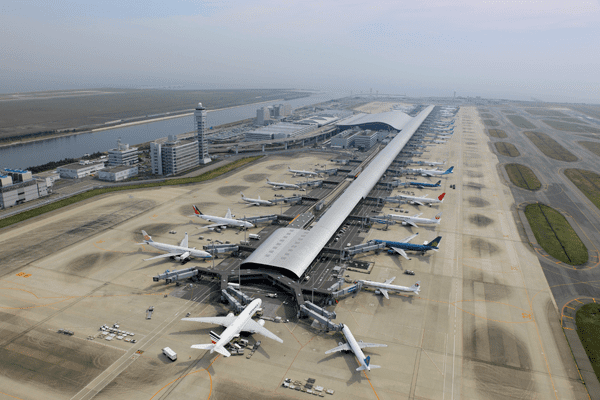
Did you know that the length of the island where Terminal 1 is located is the same as the distance from Osaka‘s Umeda to Namba? It’s about 4 km. That‘s quite long! Why don’t you try walking from Umeda to Namba as an exercise and feel the distance of the island yourself♪

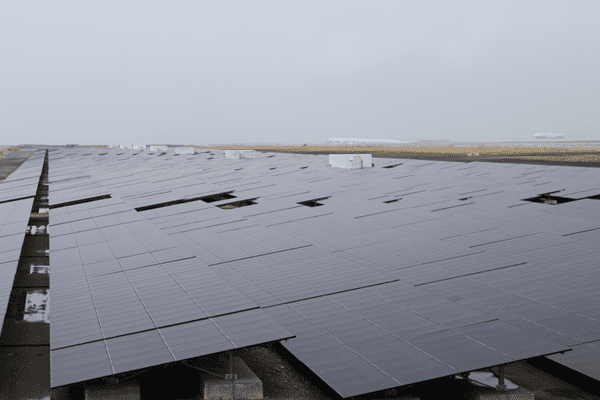
Yes, there is! A vast area of mega-solar power panels are installed on the ground along Runway B (about 96,700 m²) and on the roof of cargo warehouses (about 23,000 m²). The annual electricity generation is an impressive 12 million kWh, which is equivalent to the annual electricity consumption of about 4,100 households! It’s so environmentally friendly♪

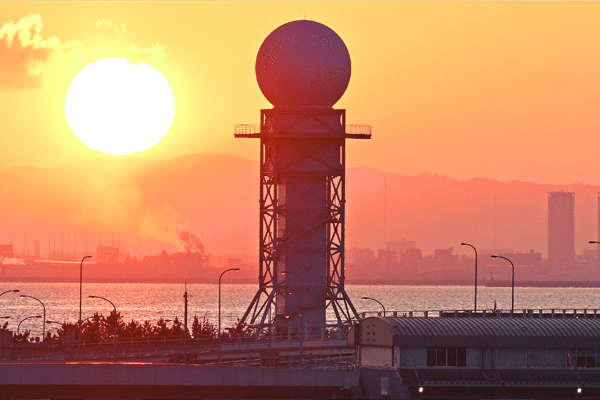
The first airport weather Doppler radar in Japan was installed at KIX in February 1995. This radar observes precipitation such as rain and snow and responds to sudden weather changes around the airport. Interestingly, it looks like a giant soccer ball, making it a unique landmark. So, if you're at the airport, keep an eye out for the big white soccer ball!

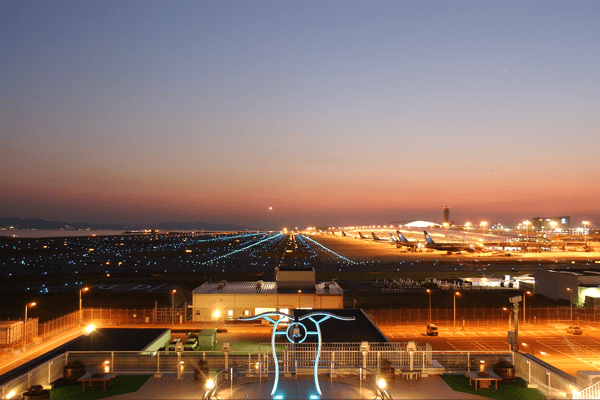
The Departure Bell on the deck is inspired by the Winged Victory of Samothrace in the Louvre Museum in France. This statue represents Nike, the goddess who ensures safe travels and watches over you with her wings spread. Ringing the Departure Bell at KIX is believed to bring good luck, and many couples visit to commemorate their marriage. A famous scene from a popular TV series, where a pilot confesses his love to a flight attendant, was filmed here. It's a lovely spot with a beautiful night view!

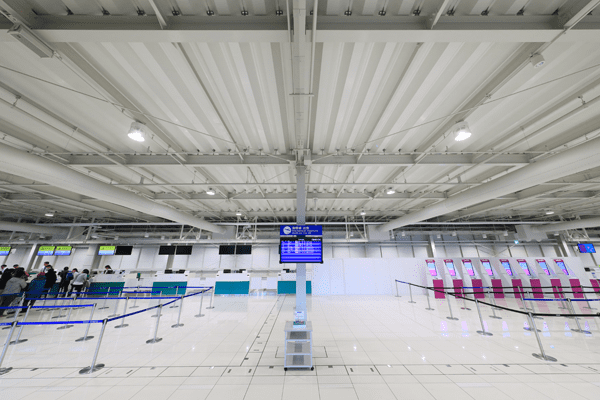
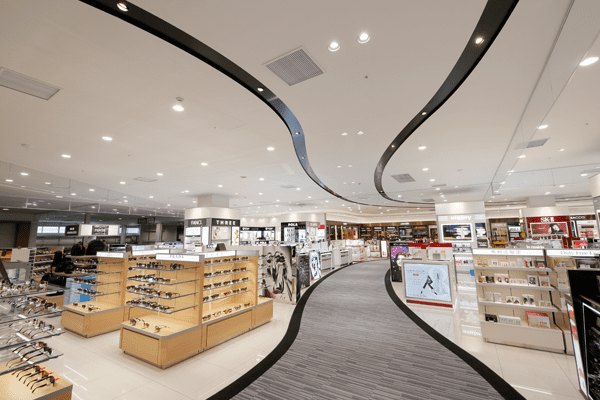
Terminal 2 at Kansai International Airport has been awarded the title of the best low-cost carrier (LCC) terminal in the World Airport Awards by Skytrax, a UK-based aviation services research company, four times since 20151. This terminal is also notable for being the first in Japan to feature a duty-free walkway, making shopping at the airport an exciting experience!

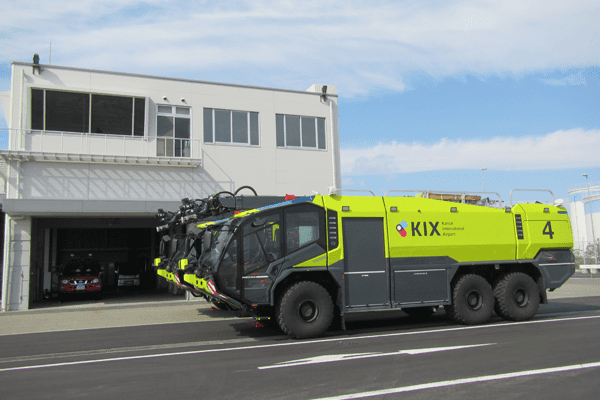
Kansai International Airport and Kobe Airport are the only airports in Japan that have a rare yellow airport chemical fire engine. The yellow body ensures high visibility, even on the runway without outdoor lights.
This fire engine is equipped with a 12,500-liter water tank and can discharge 6,000 liters of fire-extinguishing water per minute, reaching up to 85 meters at maximum power. This new model can spray water from a high place or even into an aircraft by piercing the tip of the nozzle.

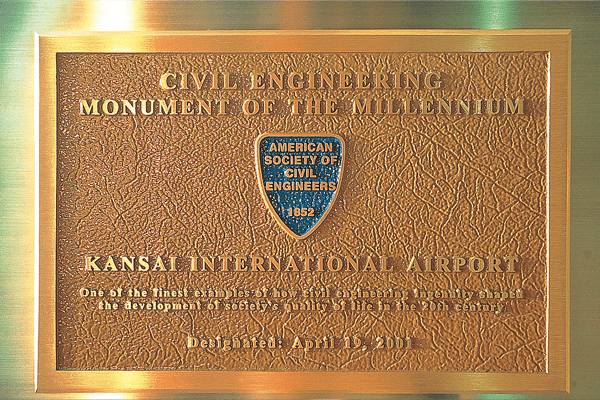
In 2001, the American Society of Civil Engineers (ASCE) recognized Kansai International Airport (KIX) as one of the “Monuments of the Millennium”. This prestigious recognition highlights KIX as one of the ten civil engineering achievements with the greatest positive impact on life in the 20th century. KIX is the world‘s first airport built on an artificial island in the ocean at a depth of 18 meters. This honor places KIX alongside other iconic structures such as the Golden Gate Bridge, the Empire State Building, and the Suez Canal, showcasing the remarkable capabilities of Japan’s civil engineering technology♪

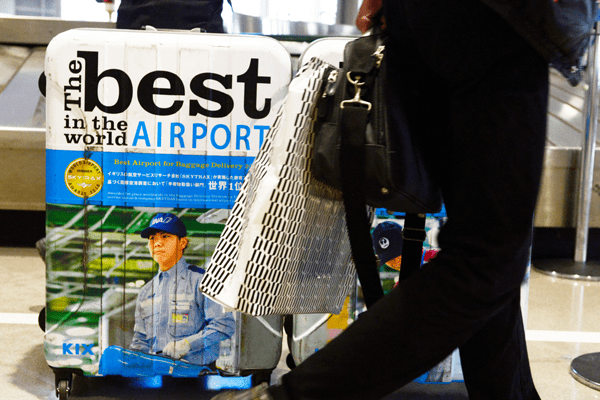
Since its opening, Kansai International Airport has handled nearly 20,000 pieces of baggage per day for both departing and arriving flights. Remarkably, there hasn‘t been a single lost baggage incident in over 30 years. Baggage is arranged with the trunk handle facing outward on the turntable, making it easy for passengers to pick up their luggage. This meticulous attention to detail ensures a stress-free experience. Skytrax, a British aviation services research company, has ranked Kansai International Airport first in the world for baggage handling eight times since 2015♪

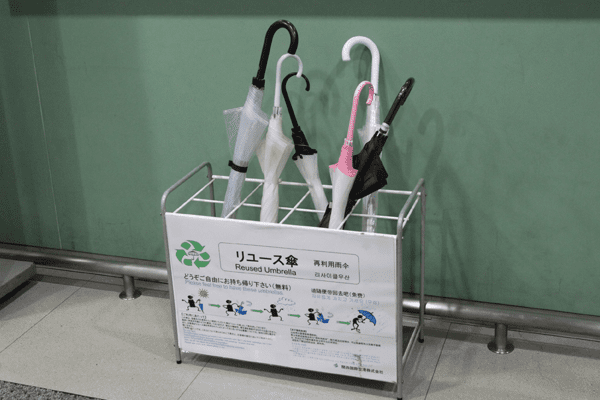
In 2007, Kansai International Airport became the first airport in Japan to introduce a reusable umbrella program. Recycling bins and collection boxes are set up throughout the airport, allowing customers to use umbrellas for free during unexpected rain. There are four recycling bins in Terminal 1, and an impressive 4,750 umbrellas were reused in fiscal 2018. Thank you to everyone for your cooperation!

Kansai International Airport provides facilities for assistance dogs, including a dedicated toilet. You can bring your dog to the parking lot outside the passenger terminal building, and assistance dogs are also allowed inside the airport. Please prepare a pet sheet for your dog to use the toilet.

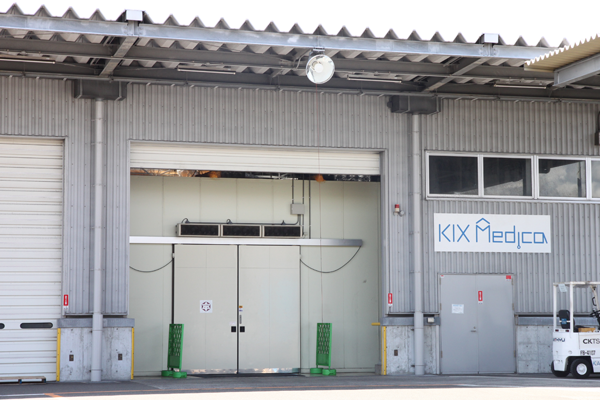
Kansai International Airport houses Japan's first warehouse dedicated to pharmaceuticals, maintaining a fixed temperature to ensure the quality of the medicine. The warehouse features two controlled temperature zones, +20°C and +5°C, to keep the medicine safe and stable.

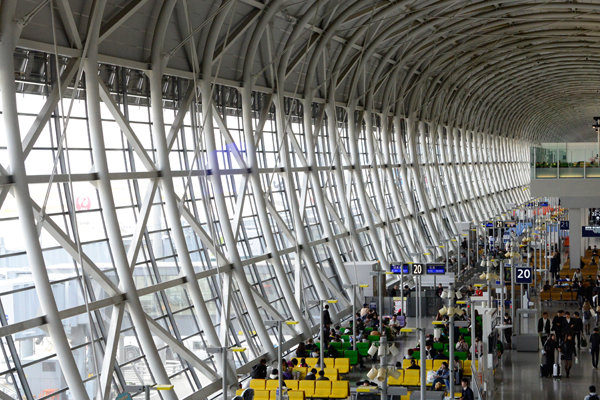
Do you know why Kansai International Airport is called KIX?
"KIX" is the universal airport code set by the International Air Transport Association (IATA). The acronym for Kansai International Airport would have been "KIA," but that code was already used by an airport in Papua New Guinea. So, "KIX" was chosen from the remaining available codes. “Kicks" sounds pretty cool, doesn’t it?!

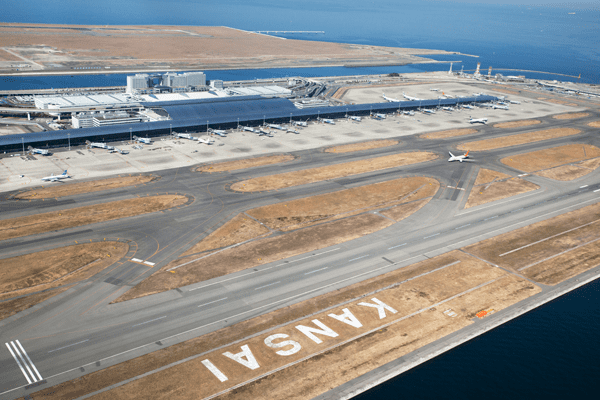
The numbers at the ends of the runway represent the runway's orientation relative to magnetic north. For example, "06" means the runway is oriented 60 degrees clockwise from magnetic north, and "24" means it's oriented 240 degrees.
Airplanes always take off and land facing into the wind, so depending on the wind direction, air traffic controllers will direct pilots to use either 06-side or 24-side of the runway.

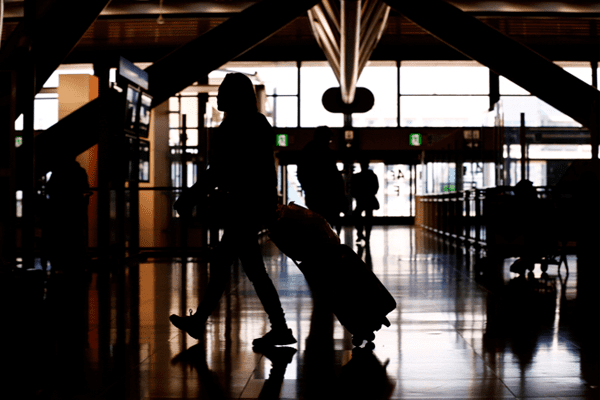
Yes, it's true! The police chief at the Kansai International Airport police station is required to register as a resident at the location of the police station. This makes the chief the only person officially residing on the island where the airport is located. Out of the approximately 15,000 people working at the airport, the police chief is the only one who lives there!

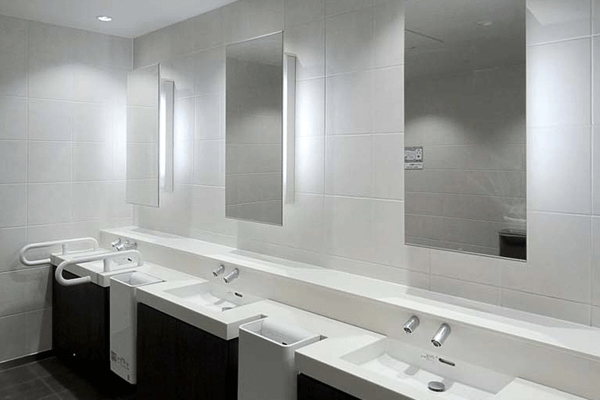
In 2020, Skytrax, a British airline service research company, ranked Kansai International Airport's staff as the best in the world. Additionally, when there was a category for the cleanliness of toilets, Kansai International Airport ranked first twice! So, you should definitely check out the world's best toilets when you visit.
