


Travel Kyoto Itinerary:6 days Must-do list in Kyoto
Day 1 | Morning
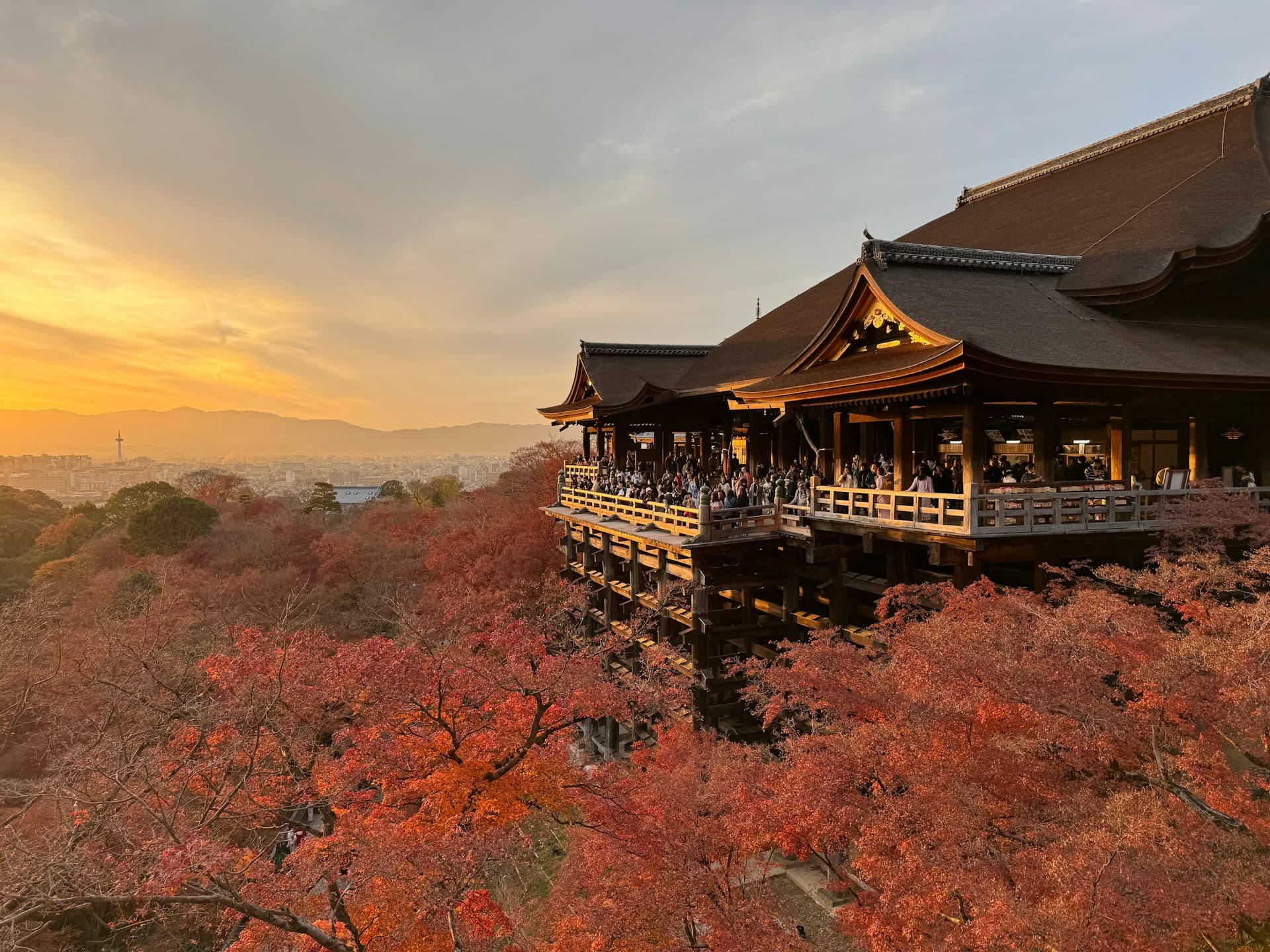
Kiyomizu-dera Temple
Opening Hours: Open at 6:00, the closing time is 17:30-18:30, depending on the season; the spring, summer and autumn are open for special visits at
night,and open at night from 22:00 on December 31, The specific opening hours are subject to the official website.
Ticket Price: 400 JPY
Recommended Length of Stay: 2-4 Hours
Location: 294 Kiyomizu 1-chome, Higashiyama Ward, Kyoto, Kyoto Prefecture 605-0862
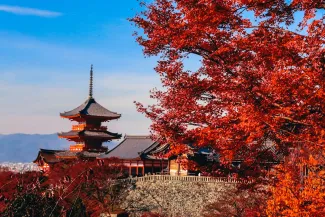
Kiyomizu-dera Temple is an ancient temple in Kyoto and was listed as a World Cultural Heritage site in 1994. The veranda of the temple suspended over
the moutain is a national treasure of Japan. It is surrounded by green trees and is full of cherry blossoms in spring. In autumn, the red maple leaves is
another attraction. It is equivalent to Kinkaku-jiand Arashiyama, and is a famous historical site in Kyoto. The pilgrims or visiting tourists who come to
worship year round come in non-stop.
🎁 Search Cheap flights from NYC to Osaka | Book your stay in Kyoto | Grab a fast Japan eSIM!
Day 1 | Afternoon
Kinkaku-ji nearby is the top choice before you leave Kiyomizu-dera Temple and hit the road.
Kinkaku-ji
Opening Hours: Open from 9:00am-5:00pm
Ticket Price: 400 JPY
Recommended Length of Stay: 1-2 Hours
Location: 1 Kinkakujichō, Kita Ward, Kyoto, 603-8361, Japan
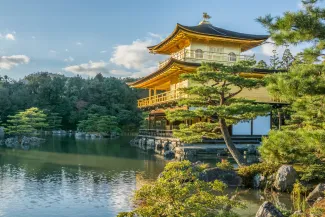
Kinkaku-ji is an ancient Japanese temple in Kyoto. Completed in 1397, it originally served as the villa of shogun Ashikaga Yoshimitsu, but was later
transformed into a Zen Buddhist temple. Originally named Rokuon-ji (literally "Deer Garden Temple"), it is also known as the Temple of the Golden Pavilion
owing to the gold foil that the outside of the building is wrapped in. In addition to being a famous tourist attraction, Kinkaku-ji has also been designated
as a National Treasure by the Japanese government and is a symbol of Kyoto.
🎁 Search Cheap flights from NYC to Osaka | Book your stay in Kyoto | Grab a fast Japan eSIM!
Day 1 | Evening
After visiting the glorious Kinkaku-ji, GARRYA NIJO CASTLE KYOTO nearby is the best place to stay.
GARRYA NIJO CASTLE KYOTO
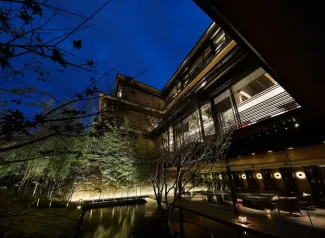
An exclusive luxury hotel with only 25 rooms, offering a peaceful and intimate stay in Kyoto. Extraordinary dining and accommodation await you in
proximity to the ambience and scenic attractions of the UNESCO World Heritage Site Nijo Castle. Travel back in time to the period between the end of the
Samurai and the dawn of a new era.
GARRYA NIJO CASTLE KYOTO
180-1 Ichinocho, Nakagyo-ku | 1.75km from downtown
Breakfast
Wi-Fi
🎁 Search Cheap flights from NYC to Osaka | Book your stay in Kyoto | Grab a fast Japan eSIM!
Day 2 | Morning
Nijo Castle
Opening Hours: 8:45-16:00 (the castle is closed at 17:00); July and August opening hours 8:00-18:00 (the castle is closed at 19:00); September opening
hours 8:00-16:00 ( The castle is closed at 17:00)
Ticket Price: 600 JPY
Recommended Length of Stay: 2-3 Hours
Location: 541, Nishijo Castle, Kawasaki, Nakagawa, Nakagyo-ku, Kyoto
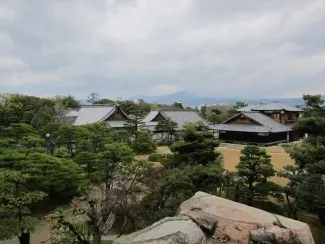
Once the acting residence of the Tokugawa shoguns while in Kyoto, Nijo Castle is also serves as a symbol of the power of the Tokugawa Shogunate. The
castle is surrounded by high walls and a moat, with the inside rooms connected by a corridor installed with the famous "nightingale floors". These floors
were designed to make a chirping sound when walked upon so as to prevent intruding assassins at night. The castle opens in the evening during cherry
blossom season, attracting flocks of visitors to view the magnificent cherry blossom trees.
🎁 Search Cheap flights from NYC to Osaka | Book your stay in Kyoto | Grab a fast Japan eSIM!
Day 2 | Afternoon
Sanjusangen-do nearby is the top choice before you leave Nijo Castle and hit the road.
Sanjusangen-do
Opening Hours: Open from 1/1-3/31,9:00am-4:00pm;Open from 4/1-11/15,8:30am-5:00pm;Open from 11/16-12/31,9:00am-4:00pm
Ticket Price: 600 JPY
Recommended Length of Stay: 1-1 Hours
Location: 657 Sanjusangendomawari, Higashiyama Ward, Kyoto, Kyoto Prefecture
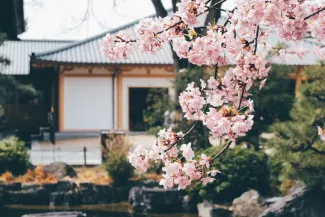
Sanjusangen-do Temple, also known as the Hall of the Lotus King, boasts one of Japan's few long wooden buildings, its main hall stretching from north to
south. Although the exterior is simple and austere, the interior is shockingly different. The temple is filled with Japanese National Treasures, including
Buddhist statues and cultural relics, and it is especially famous for the impressive number of statues of the Thousand Armed Kannon. These statues vary
in appearance, from differences in clothing and musical instruments to expressions and postures. The temple is also known for its archery competition
which is held here every year.
Day 2 | Evening
After visiting the glorious Sanjusangen-do, Kuraya Nanseicho nearby is the best place to stay.
Kuraya Nanseicho
Age of construction before renovation: over 99 years The building was used as a facility to manufacture electronic parts, so it was refurbished multiple
times, making it a long building running north with three connected buildings and a total floor area of approximately 330 square meters. The width of
the buildings are 7.28 meters. The depths of the western and central buildings being 9.1 meters, and the eastern building’s depth is 5.46 meters. The
walls separating the rooms were kept to the least, making the space integrated.
Manufacturing of electronic components boomed during the high economic growth period, resulting in the refurbishing of the facility.
We renovated the western-side building facing the street. Also, the eastern-side building got a simple retouch and making it into a tin crafting atelier, and
the central building was taken down and made into a beautiful yard tucked between the western and eastern buildings.
The first floor of the western-side building’s façade is decorated with artificial marble up to waist height, and has a 4.45-meter wide iron barred window. On the
second floor, it has 1.82 meter and 2.73-meter wide glass windows. These windows each have door pockets, and decorated with wooden frames and handrails.
The exterior wall and the bottom side of the roof was finished with mortar.
Although the building was vacant for a few months, it was used as a residence until then. Keeping the renovation to the least, we kept the original design
and reintroduced the building as Machiya Ryokan “Kuraya”.
We would like to provide you priceless experience of Japanese "living" and hope you spend a wonderful time at Kuraya.
Southeast Asia (7 countries) | 5G/4G eSIM | Daily plan/Data package | 24-hour billing | 1 - 30 days | QR code SIM card
★4.5/5 2334 reviews
Day 3 | Morning
Kyoto Tower
Opening Hours: Sun - Sat 9:00 AM - 8:30 PM
Ticket Price: 770 JPY
Recommended Length of Stay: 1-2 Hours
Location: 721-1 Higashishiokōjichō, Shimogyo Ward, Kyoto, 600-8216, Japan
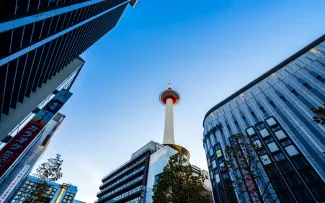
Standing tall in front of Kyoto Station, Kyoto Tower is one of the landmarks of Kyoto, remembered by almost every visitor to the city. The tower itself is
designed in the shape of a candle, while the observatory deck provides a great place to look out over the streets of Kyoto and enjoy panoramic views of
the surrounding shrines, temples, and Higashiyama mountains. In addition to the observatory, a restaurant, hot spring, and hotel can be found inside
the tower.
Day 3 | Afternoon
Now we come to another great highlight in the city: Ginkakuji.
Ginkakuji
Opening Hours: March-November 8:30-17:00, December-February 9:00-16:30, all year round.
Ticket Price: 500 JPY
Recommended Length of Stay: 1-1 Hours
Location: 2 Ginkakujichō, Sakyo Ward, Kyoto, 606-8402, Japan
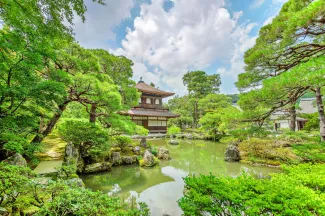
A UNESCO World Heritage site, Ginkakuji was originally built as a villa for shogun Ashikaga Yoshimasa and modeled after Kinkaku-ji (Golden Pavilion) The
temple has two floors. The first floor, built in the same style as Saihoji Temple, is called Shinku-den, and the second floor Cho-onkaku is dedicated to
Kannon, the Buddhist goddess of mercy. Despite its nickname as the Silver Pavilion, the exterior of the temple was never actually covered in silver, but
rather painted white instead. The garden is comprised of the Silver Pavilion, Togudo Temple (East Seeking Hall), and a pond, accompanying a white sand
garden representing the sea and waves.
🎁 Search Cheap flights from NYC to Osaka | Book your stay in Kyoto | Grab a fast Japan eSIM!
Day 3 | Evening
After visiting the glorious Ginkakuji, MARUFUKURO nearby is the best place to stay.
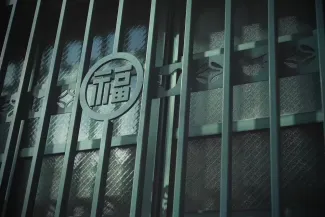
MARUFUKURO
The MARUFUKURO is an ideal spot for travelers wanting to discover the city. Visitors to Kyoto will find that the MARUFUKURO is a fantastic
accommodation choice.
With Shichijo Railway Station just 800m away and Osaka International Airport only 49km away, transportation is very convenient. The closest major
public transportation, Gojō Metro Station, is only 100m away. With 正面の湯, Kyoto National Museum and Ruins Myohoin Gate all within a short distance,
there is no shortage of things to do in the area.
This hotel makes a great place to kick back and relax after a long day of sightseeing.
According to our trusted guests, the facilities at this hotel are first-rate.
MARUFUKURO
Kagiyacho 342, Shimogyo Ward | 2.21km from downtown
No breakfast
Wi-Fi
Day 4 | Morning
Ryōan-ji
Opening Hours: Open from 1/1-2/29,8:30am-4:30pm;Open from 3/1-11/30,8:00am-5:00pm;Open from 12/1-12/31,8:30am-4:30pm
Ticket Price: 500 JPY
Recommended Length of Stay: 2-2 Hours
Location: 13 Ryoanji Goryonoshitacho, Ukyō-ku, Kyoto, Kyoto Prefecture 616-8001, Japan
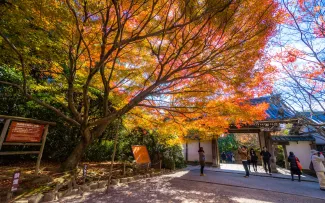
Ryoan-ji is a temple of Zen Buddhism within the northwest a part of the city whose name manner 'temple of the peaceful dragon'. Zen and lay visitors
alike experience a feel of calm right here (despite the thousands of other people also right here to enjoy that equal feel of calm). Of word right here is the
Zen rock lawn inside the temple's grounds, which incorporates 15 rocks blanketed with moss on a bed of flawlessly raked white gravel. They may be
placed so that visitors can handiest see 14 rocks from any perspective. Earlier than getting into a temple, it is standard to use the basin in the front to
scrub hands and mouth to purify yourself.
Day 4 | Afternoon
Kodaiji nearby is the top choice before you leave Ryōan-ji and hit the road.
Kodaiji
Opening Hours: Open from 9:00am-5:30pm
Ticket Price: 600 JPY
Recommended Length of Stay: 2-2 Hours
Location: 526 Shimokawaramachi, Kodaiji, Higashiyama-ku, Kyoto
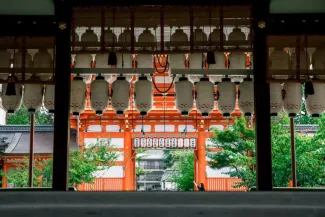
It is located at the foot of Dongshan Lingshan, northeast of Yasaka Fakan Temple. The official name is Gaotai Shousheng Zen Temple, which was built in
the 11th year of Qingchang (1606) after the death of Toyotomi Hideyoshi, and his wife, Beizhengsu, prayed for the blessing. In July of the first year of
Kuanyong (1624), the monk Sanjiang who invited Jianren Temple to be the elder of Kaishan, also known as Gaotai Temple. Gaotai Temple was built on the
mountain, with a large scale. It was destroyed by fire, and now only Kaishan Hall and other buildings remain. The Umbrella Pavilion, Shiyu Pavilion Tea
Room, Spirit House, and Viewing Platform are all scenic spots in the temple. In spring and autumn, Kodai-ji Temple is one of the most beautiful sights in
Kyoto when it is illuminated at night with cherry blossoms and autumn leaves.
Day 4 | Evening
Don’t forget to book Hotel Okura Kyoto Okazaki Bettei in advance, because all the tourists head to Kodaiji love staying at it.
Hotel Okura Kyoto Okazaki Bettei
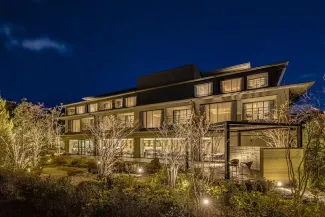
Hotel Okura Kyoto Okazaki Bettei will overlook Marutamachi Dori in the Rakuto and Okazaki areas of Kyoto, close to many of the city’s famous
sightseeing spots, with the Heian Shrine, Nanzenji Temple and Kyoto City Zoo all nearby. In addition, the Okazaki area is known for its culture and art and
contains many museums and other cultural facilities where guests can enjoy exhibitions of a wide variety of art and traditional craft products from Kyoto
as well as Noh theater performances.
The new hotel will offer 60 guest rooms ranging from 40 square meters in size, including eight 80-square meter suite rooms in the theme of a mountain
villa. It will be located near the historic Okazaki Betsuin Temple, overlooking the rich natural environment of the temple grounds, with the suites and
some other rooms offering guests changing views of the seasonal scenery in its Japanese gardens.
Hotel Okura Kyoto Okazaki Bettei
26-6 Okazaki Tenno-cho | 1.92km from downtown
Breakfast
Wi-Fi
Gym
Day 5 | Morning
Kenninji
Opening Hours: Open from 10:00am-5:00pm
Ticket Price: 600 JPY
Recommended Length of Stay: 2-2 Hours
Location: 584 Yamatooji Yojo-sagaru Komatsucho, Higashiyama-ku, Kyoto 605-0811, Kyoto Prefecture
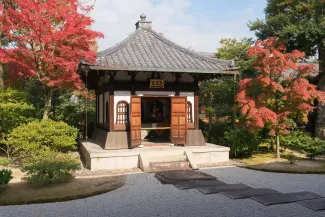
This is the first Zen temple in Kyoto founded in 1202 by Zen Master Eisei, who introduced tea to Japan. In the temple, there is a picture of the god of wind
and thunder, the representative work of Zhongda of the watch house. There are many buildings in the temple, and there are 15 temples. Every spring, on
the birthday of Zen Master Rongxi, a large tea party is held to perform the ancient Zen tea method. Kennin-ji Temple is a secluded place in the hustle and
bustle of Gion life. The "Double Dragons" on the roof of the main hall is the treasure of the temple. The famous "Chaosheng Garden" in the temple is
located at the back of the main hall, which is a simple and typical Zen garden. There are 3 stones placed in the garden, representing the Buddha and two
Zen monks. There is also a flat stone for meditation, surrounded by red maples to add to the beautiful scenery of the garden.
Day 5 | Afternoon
Eikan-do Zenrin-ji nearby is the top choice before you leave Kenninji and hit the road.
Eikan-do Zenrin-ji
Opening Hours: Open from 9:00am-5:00pm
Ticket Price: 600 JPY
Recommended Length of Stay: 1-1 Hours
Location: 48 Eikandōchō, Sakyo Ward, Kyoto, 606-8445, Japan
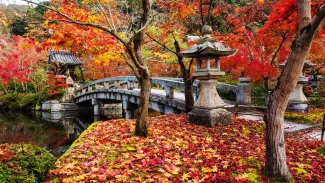
Zenrin-ji Temple, known as Eikando, was founded in the early Heian period (853) as the dojo of Shingon sect and the place where eminent monks
chanted Buddha. The name of Yongguan Hall is derived from the residence of eminent monks who strictly abide by the precepts. Since the opening of
the temple, it has continuously held charitable activities and is a pioneer of social welfare activities in today's society. The temple preserves a large
number of portraits and books before and after the Kamakura period, some of which have been listed as national designated cultural properties. Among
them, the Yamagoshi Amitabha and the golden bronze lotus plate are also listed as national treasures, and the "Amitabha" enshrined in the Ekando Hall.
It is a work from the Kamakura period. Its special feature is that the head of the Buddha is turned to the left. Unlike ordinary Buddha statues, similar
Buddha statues have only appeared in Sichuan, which is very rare. Yongguantang is also a place for viewing red leaves, attracting tourists to take
pictures and enjoy the maple every autumn.
Day 5 | Evening
For convenient access to more popular attractions, Hotel The Celestine Kyoto Gion is the best places.
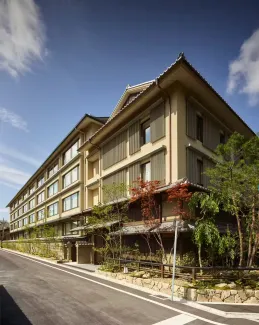
Hotel The Celestine Kyoto Gion
Hotel The Celestine Kyoto Gion, located in Higashiyama, Kyoto, is a popular choice for travelers. The city center is merely away and the airport can be
reached within minutes. With its convenient location, the hotel offers easy access to the city's must-see destinations.
At Hotel The Celestine Kyoto Gion, every effort is made to make guests feel comfortable. To do so, the hotel provides the best in services and amenities.
A selection of top-class facilities such as free Wi-Fi in all rooms, 24-hour security, daily housekeeping, wheelchair accessible, 24-hour front desk can be
enjoyed at the hotel.
The hotel features 157 beautifully appointed guest rooms, many of which include television LCD/plasma screen, air purifier, complimentary tea, free
welcome drink, humidifier. Besides, the hotel's host of recreational offerings ensures you have plenty to do during your stay. With an ideal location and
facilities to match, Hotel The Celestine Kyoto Gion hits the spot in many ways.
Hotel The Celestine Kyoto Gion
Komatsucho 572 | 1.52km from downtown
Breakfast
Spa
Wi-Fi
Parking
Day 6 | Morning
Jojakko-ji Temple
Opening Hours: Open from 9:00am-5:00pm
Ticket Price: 500 JPY
Recommended Length of Stay: 2-3 Hours
Location: 3 Sagaogurayama Oguracho, Ukyo Ward, Kyoto, 616-8397
Changjikoji Temple is a Nichiren sect temple located in Ukyo District, Kyoto City, Kyoto Prefecture, Japan. It is a famous temple in Kyoto, and it is also the
residence of Fujiwara Dingjia, the author of the well-known Japanese poetry collection "Hundred People One Waka Collection". Jojiko-ji Temple is
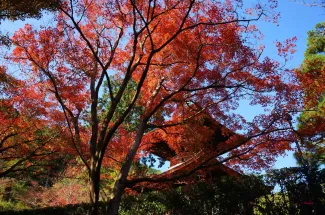
surrounded by the rich natural environment of Mt. Kokura, and the path to the shrine on the stone steps from Niohmon Gate is interesting and beautiful.
No matter the season is full of fun, autumn is also Arashiyama's premier spot for autumn leaves, and it shows a mysterious and profound scene.
Day 6 | Afternoon
After finishing the tour at Jojakko-ji Temple, you can head to Sanzen-in Temple, the most worth visiting place around the corner.
Sanzen-in Temple
Opening Hours: Open from 8:30am-5:00pm
Ticket Price: 700 JPY
Recommended Length of Stay: 1-1 Hours
Location: 540 Ōhararaikōinchō, Sakyo Ward, Kyoto, 601-1242, Japan
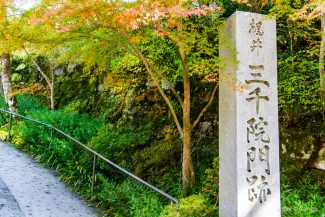
Sanqianyuan, located in Ohara, Sakyo District, Kyoto City, Kyoto Prefecture, Japan, is a Tiantai sect temple built in 1118. As one of the three major
monasteries of the Tiantai Sect, Sanqian-in is famous for its elegance and beauty. Gorgeous palaces, well-designed courtyards, and beautiful scenery of
the four seasons together constitute the Sanzen-in Temple, a must-visit attraction when visiting Ohara. The garden is densely covered with moss and
cedar trees block the sun.
There are about 3000 hydrangeas in the natural forest in the backyard. During the rainy season, flowers bloom and the scenery is intoxicating. Entering
from the guest hall, here is the Xuanguan of the Sanqianyuan, and outside the guest hall is the famous courtyard in Kyoto - Jubi Garden. of beauty.
Passing through the guest hall, you need to take off your shoes to enter the Chen Palace. The vast courtyard in front of the Chen Palace is the Youqing
Garden in Sanqianyuan, which is a chiquan-style garden. , cute and funny.
Day 6 | Evening
Don’t forget to book Kyoto SERYO in advance, because all the tourists head to Sanzen-in Temple love staying at it.
Kyoto SERYO
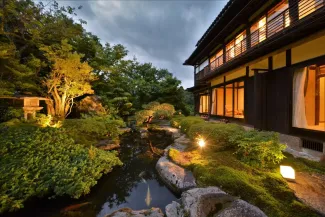
Ohara, Another Kyoto… Seryo is a Ryokan located within the naturesque countryside of Ohara, Kyoto. Please enjoy soothing and relaxing time in a serene
atmosphere, watching dynamic mountain view. Highly recommendable kaiseki cuisine uses locally sourced seasonal vegetables.
Kyoto SERYO
Oharashorinin-cho 22 | 13.37km from downtown
Breakfast
Wi-Fi
Parking
FAQs about Best Things to Do in Kyoto
What is Kyoto famous for?
Delicious Food. Shojin ryori. ...
Temples & Shrines. Kinkakuji. ...
Garden Sanctuaries. Ginkakuji. ...
Museums. Kyoto National Museum. ...
Gion Geisha District. Gion Geisha District. ...
The Philosopher's Path. The Philosopher's Path. ...
Kyoto Imperial Palace. Kyoto Imperial Palace. ...
Mount Rokko Sightseeing. Mount Rokko.
Is 3 days in Kyoto enough?
Yes, 3 days is enough in Kyoto, but only just. I'm really glad we could spend three full days in Kyoto, but I could have easily filled a fourth, and spent a lot of time re-working our itinerary in Kyoto to try and see as much as possible.
What is the number one thing to see in Kyoto?
Perhaps the single most impressive sight in all of Kyoto, bar none, Fushimi-Inari-Taisha Shrine is the most important shrine in the entire city. Don't miss it! Ginkaku-ji temple, the “Silver Pavilion”, has magnificient halls and gardens, with a tremendous viewpoint over the entire temple compound.